
Introduction
The demand for a certified life coach continues to rise as individuals seek structured guidance rather than temporary motivation. In 2026, clients expect measurable transformation, emotional intelligence, and strategic direction from every certified life coach they work with. Certification alone is no longer enough to stand out.
Modern clients evaluate expertise based on practical life coaching techniques and proven coaching skills for success. A certified life coach must combine technical knowledge with emotional maturity, communication mastery, and strategic thinking to remain relevant in a competitive coaching landscape.
How a Life Coach in Kolkata Helps Students and Young Adults Make Better Career Decisions
Why Skill Development Matters for Every Certified Life Coach
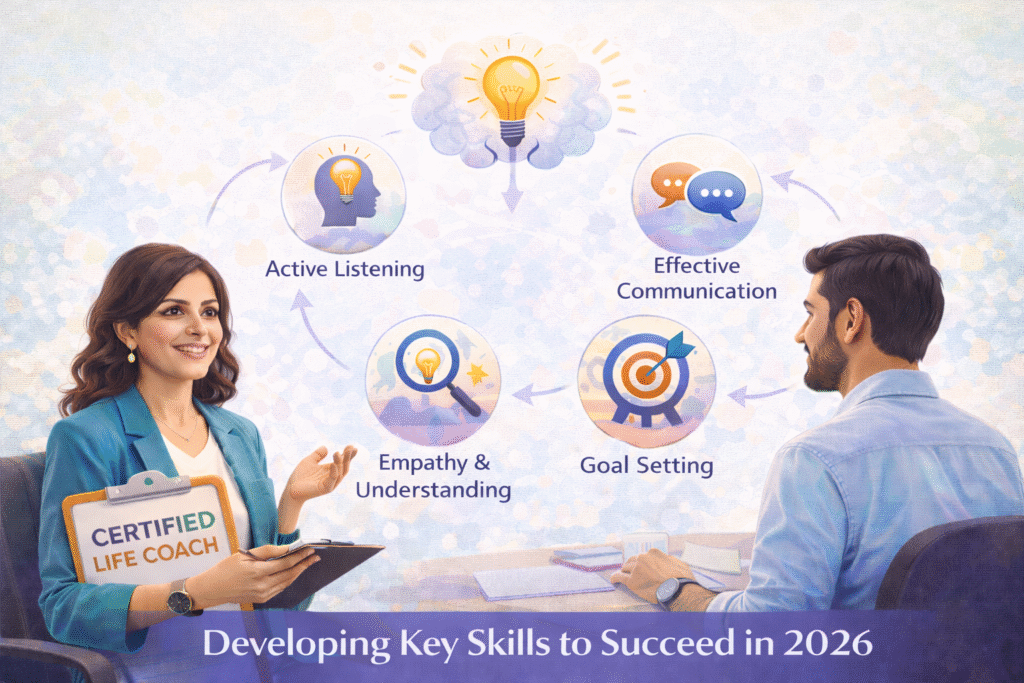
The coaching industry has evolved significantly. A certified life coach today operates in a results driven environment where clients expect clarity, accountability, and long term impact. Simply holding a certificate does not guarantee effectiveness.
Continuous skill development ensures that a certified life coach remains adaptable and competent. Coaching skills for success act as a competitive advantage, helping professionals deliver structured transformation rather than motivational conversations. Mastering advanced life coaching techniques strengthens credibility and long term client trust.
Core Communication Skills Every Certified Life Coach Must Master
Communication is the foundation of effective coaching. A certified life coach must create a safe and reflective environment where clients feel heard and understood. Strong communication skills influence clarity, trust, and long term engagement.
Active Listening as a Foundation for a Certified Life Coach
Active listening is one of the most essential life coaching techniques. It goes beyond hearing words and focuses on understanding meaning and emotion.
• Deep listening beyond surface responses
A certified life coach listens for underlying patterns, beliefs, and emotional cues rather than reacting to statements at face value.
• Observing tone, body language, and emotional shifts
Non verbal signals often reveal more than spoken words. Recognizing these cues strengthens coaching skills for success.
• Creating psychological safety
Clients share openly when they feel secure. A certified life coach builds trust by remaining neutral and non judgmental.
These life coaching techniques help uncover root challenges instead of temporary symptoms.
Powerful Questioning Skills for a Certified Life Coach
Questioning is a defining skill of a certified life coach. Strategic questions encourage reflection and self discovery.
• Open ended questions
A certified life coach uses open questions to stimulate deeper thinking and expand perspective.
• Reflective questioning
This technique mirrors client thoughts back to them, increasing awareness and clarity.
• Clarifying assumptions
Challenging hidden assumptions helps clients reframe limiting beliefs, a core element of coaching skills for success.
Strong questioning ensures that life coaching techniques lead to self driven insight rather than advice dependency.
Read More: Why Hiring a Certified Life Coach Can Transform Your Personal and Professional Life
Emotional Intelligence Skills Required for a Certified Life Coach
Emotional intelligence determines how effectively a certified life coach manages client emotions while maintaining professional clarity. Coaching often involves stress, vulnerability, and complex personal challenges.
Without emotional intelligence, even strong life coaching techniques may fail to create lasting impact.
Self Awareness in a Certified Life Coach
Self awareness ensures that personal bias does not interfere with coaching.
• Recognizing personal bias
A certified life coach must remain objective and avoid projecting personal experiences onto clients.
• Managing emotional triggers
Emotional neutrality strengthens coaching skills for success and prevents reactive guidance.
• Maintaining professional boundaries
Clear boundaries protect both coach and client while preserving the integrity of professional life coaching techniques.
Emotional Regulation and Empathy as Coaching Skills for Success
Empathy builds trust, but regulation ensures stability.
• Balanced response to client emotions
A certified life coach supports emotional expression without amplifying intensity.
• Supporting resilience
Life coaching techniques often focus on helping clients develop coping strategies and emotional strength.
• Avoiding emotional dependency
Coaching skills for success include empowering independence rather than creating reliance.
Emotional intelligence strengthens credibility and long term effectiveness.
Read More: Career Guidance for Women in Tech and Business: Breaking Bias and Closing the Gap
Strategic Thinking and Goal Setting Skills for a Certified Life Coach
Strategic thinking distinguishes a professional certified life coach from informal mentors. Clear goal setting frameworks ensure measurable progress and structured transformation.
Life coaching techniques must align with long term objectives rather than short term reactions.
Goal Mapping and Accountability Techniques Used by a Certified Life Coach
• SMART frameworks
A certified life coach uses structured goal systems to define clear and realistic targets.
• Progress tracking
Monitoring outcomes ensures that life coaching techniques translate into real action.
• Performance evaluation
Coaching skills for success include reviewing progress, adjusting strategies, and reinforcing accountability.
Structured frameworks transform reflection into measurable achievement.
Read More: Top 10 Female Life Coaches in India You Should Follow in 2026
Advanced Life Coaching Techniques Every Certified Life Coach Should Use in 2026
As client expectations evolve, advanced life coaching techniques become essential for success.
1 Cognitive reframing
A certified life coach helps clients reinterpret challenges through new perspectives, promoting resilience.
2 Behavioral pattern analysis
Identifying recurring habits strengthens coaching skills for success and enables long term change.
3 Habit building frameworks
Life coaching techniques often involve structured routines that reinforce productive behavior.
4 Leadership mindset coaching
Professionals seek certified life coach support to develop confidence, authority, and strategic presence.
5 Stress management tools
Effective life coaching techniques include emotional regulation and mental clarity practices.
A certified life coach strategically applies these methods depending on client goals and challenges.
Business and Professional Coaching Skills for Success in 2026
In 2026, a certified life coach must also understand branding, ethics, and client management. Coaching is both a profession and a business.
Strong coaching skills for success include maintaining credibility and delivering structured professional standards.
Branding and Ethical Practice for a Certified Life Coach
• Maintaining credibility
A certified life coach must communicate transparently and professionally.
• Transparent communication
Clear expectations and boundaries build trust and reinforce structured life coaching techniques.
• Clear ethical boundaries
Professional conduct ensures sustainable client relationships.
Client Retention and Growth Through Coaching Skills for Success
• Structured session flow
A certified life coach organizes sessions with clear objectives and measurable outcomes.
• Progress measurement
Tracking development strengthens trust in life coaching techniques.
• Long term client development
Coaching skills for success focus on sustainable transformation rather than short engagements.
READ MORE: Is AI-Powered Life Coaching Better Than Human Life Coaches? A Clear Comparison
Certified Life Coach Skill Comparison Table
Essential Skills of a Certified Life Coach in 2026
| Skill Category | What It Means for a Certified Life Coach | Related Life Coaching Techniques | Impact on Coaching Skills for Success |
| Communication | Ability to actively listen, ask powerful questions, and create clarity in conversations | Reflective questioning, open ended dialogue, structured feedback | Builds trust, improves clarity, strengthens long term client relationships |
| Emotional Intelligence | Maintaining empathy, neutrality, and emotional regulation during sessions | Emotional awareness exercises, resilience frameworks | Increases client retention and deepens transformation outcomes |
| Strategic Planning | Structuring goals and aligning actions with long term objectives | SMART goal mapping, accountability tracking systems | Ensures measurable progress and consistent results |
| Leadership Coaching | Helping clients develop authority, confidence, and decision making strength | Mindset reframing, leadership presence training | Supports professional growth and executive readiness |
| Ethical Practice | Following confidentiality, boundaries, and professional conduct standards | Structured agreements, ethical coaching frameworks | Builds credibility and long term professional reputation |
This table highlights how a certified life coach combines structured life coaching techniques with strong coaching skills for success to deliver measurable and sustainable transformation.
Common Skill Gaps That Prevent a Certified Life Coach from Succeeding
• Lack of structured life coaching techniques
A certified life coach who does not use organized frameworks may deliver inconsistent results and unclear progress.
• Weak communication clarity
Strong coaching skills for success require precise questioning, active listening, and clear summaries to avoid confusion.
• Poor emotional regulation
A certified life coach must remain neutral and emotionally balanced to apply life coaching techniques effectively.
• Absence of measurable systems
Without goal tracking and accountability, sessions lack structure and sustainable outcomes.
• Over reliance on motivation
Encouragement alone cannot replace structured life coaching techniques and strong coaching skills for success.
READ MORE: Life Coaching for Anxiety, Overthinking, and Decision Paralysis | A Simple Guide
Before and After Skill Development in a Certified Life Coach
Impact of Developing Coaching Skills for Success
| Area of Performance | Before Skill Development | After Mastering Coaching Skills for Success |
| Client Clarity | Inconsistent outcomes and unclear direction | Structured transformation with measurable progress |
| Session Flow | Unstructured and reactive conversations | Goal oriented sessions using clear life coaching techniques |
| Professional Confidence | Self doubt and hesitation during sessions | Strong professional presence as a certified life coach |
| Client Retention | Short term engagement without continuity | Long term client loyalty through effective life coaching techniques |
| Overall Impact | Temporary motivation without sustained change | Sustainable results driven by structured coaching skills for success |
How a Certified Life Coach Can Continuously Improve Skills
The coaching profession evolves every year. A certified life coach who stops learning risks becoming outdated in methods and mindset. Continuous improvement ensures that life coaching techniques remain relevant and aligned with modern client expectations.
Professional development strengthens coaching skills for success and helps a certified life coach deliver consistent, measurable results in 2026 and beyond.
Ways a Certified Life Coach Can Improve Skills
• Ongoing certification upgrades
Advanced certifications refine expertise and introduce updated life coaching techniques that match evolving industry standards.
• Supervision and mentorship
Working with experienced mentors helps a certified life coach reflect on blind spots and improve coaching skills for success.
• Feedback analysis
Reviewing client feedback highlights strengths and improvement areas, strengthening professional credibility.
• Practice of advanced life coaching techniques
Regular practice ensures structured application rather than theoretical understanding.
• Business skill enhancement
A certified life coach must also improve branding, communication strategy, and service delivery to remain competitive.
Continuous growth ensures that coaching quality improves over time rather than remaining static.
Conclusion
Success in 2026 requires more than holding a title. A certified life coach must master communication, emotional intelligence, strategic thinking, and structured life coaching techniques to remain effective. Certification provides the foundation, but coaching skills for success determine long term impact.
As client expectations grow, the future of the certified life coach profession depends on adaptability and continuous improvement. Mastering modern life coaching techniques and refining coaching skills for success ensures sustainable credibility, measurable transformation, and lasting professional relevance.
Start Your Transformation with Sukanya Debnath
If you’re ready to start your personal growth journey, begin with the best. Sukanya Debnath offers personalized, empathetic, and result-driven coaching programs that have transformed hundreds of lives.
Book a free consultation today and take the first step toward unlocking your true potential.
FAQs
1 What makes a certified life coach successful?
A certified life coach becomes successful by mastering communication, emotional intelligence, and structured life coaching techniques.
2 Which life coaching techniques are most effective?
Techniques such as cognitive reframing, goal mapping, and behavioral analysis are highly effective when applied consistently.
3 Why are coaching skills for success important?
Coaching skills for success ensure clarity, accountability, and measurable outcomes rather than temporary motivation.
4 Can a certified life coach succeed without emotional intelligence?
Emotional intelligence is essential for applying life coaching techniques effectively and maintaining client trust.
5 How can a certified life coach improve communication?
Through active listening practice, structured questioning, and continuous feedback analysis.
6 Are advanced life coaching techniques necessary in 2026?
Yes, advanced life coaching techniques help a certified life coach stay competitive and relevant.
7 What business skills should a certified life coach have?
Branding, ethical practice, client management, and structured service delivery are important business skills.
8 How often should coaching skills for success be updated?
Skills should be reviewed and upgraded regularly through training, supervision, and practice.
9 Is certification enough to become a successful certified life coach?
Certification is important, but long term success depends on practical application of life coaching techniques and strong coaching skills for success.
10 What is the most important skill for a certified life coach?
Communication combined with emotional intelligence is the most critical foundation for effective coaching.
