
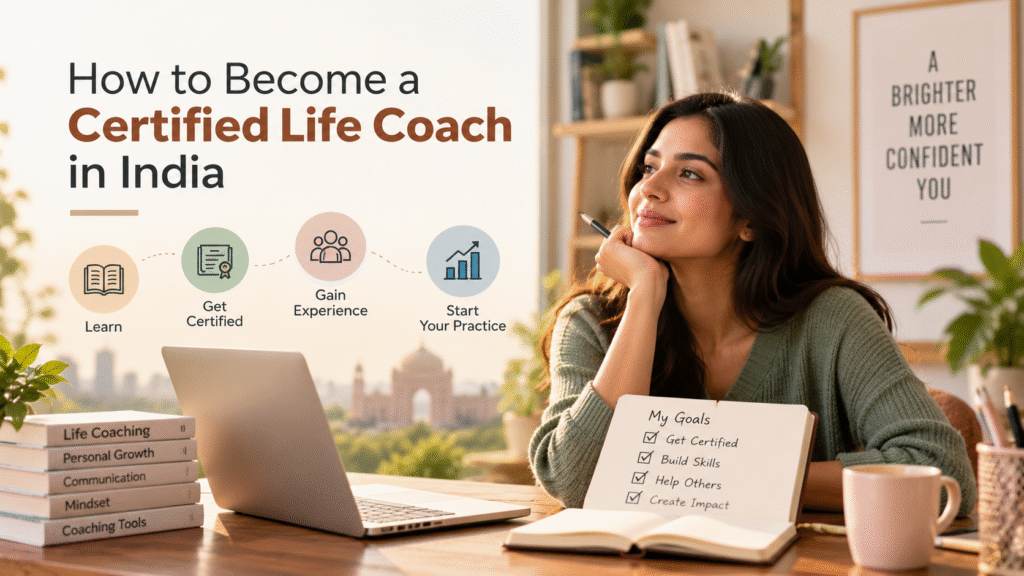
Life coaching has evolved from being an obscure concept to a recognised support profession in India. Professionals, teachers, HR leaders and career changers are turning to it as a way to help others grow. But the road is not straight and the quality of training is very uneven. This guide covers what the job involves, how to develop your skills, and how to choose the best learning route.
What a Professional Life Coach Does
Professional life coaching is a structured, client-centered partnership. A coach can help clients get clear on what they want, what’s in the way, and how to take consistent action to create the changes they seek in career, relationships, health habits, or personal growth.
A coach does not diagnose or treat mental health conditions and does not provide legal, medical or financial advice. Coaching involves the present and the future and the client’s own insight and responsibility, not healing past trauma. One of the first lessons any good program should teach is to know this boundary.
Skills Required to Become a Life Coach
Strong coaching skills are built, not assumed. The core competencies include:
- Active listening: Hearing what is said, what is left unsaid, and what the client’s tone suggests.
- Powerful questioning: Asking open, non-leading questions that prompt reflection.
- Goal-setting: Turning vague aspirations into specific, measurable, time-bound actions.
- Empathy without judgment: Staying supportive while maintaining professional distance.
- Accountability and feedback: Challenging clients respectfully and tracking progress.
- Self-awareness: Recognising your own biases so they do not shape the session.
Understanding Your Learning and Training Pathways
There is no single mandatory route into the profession in India. Life coaching is largely self-regulated, so requirements depend on the training provider and on any professional credentialing body you choose to work with. A short course alone does not guarantee competence.
| Pathway | Typical Format | Best For | Key Consideration |
| Short workshops and introductory courses | Days to a few weeks, often online | Exploring the field | Useful for orientation, rarely enough for professional practice |
| Structured life coach training programs | Several months, live and practical components | Aspiring full-time or part-time coaches | Look for assessed practice and mentoring |
| Internationally aligned credential routes | Training hours plus logged coaching hours and an assessment | Coaches seeking global recognition | Requirements are set by the credentialing body, not the school |
| Related degrees (psychology, HR, education) | Multi-year academic study | Those wanting a broader foundation | Not a coaching credential on its own |
| Self-study and peer practice | Books, communities, practice partners | Supplementing formal learning | Cannot replace supervised feedback |
Many people combine these, for example a degree or workplace experience alongside a structured coaching program.
Certification, Accreditation, and Credentials: What’s the Difference?
These terms are often used loosely, so it helps to separate them:
- Certification usually means a training provider confirms you completed their program and met its assessment standards.
- Accreditation applies to the program itself, meaning an external body has reviewed its curriculum and delivery against published standards.
- Professional credentials are issued by independent coaching bodies, often requiring a set number of training and coaching hours, a assessment, and adherence to a code of ethics.
When evaluating life coach certification in India, ask which body recognises the program and what the credential actually requires. Verify claims directly with the credentialing organisation rather than relying on a provider’s marketing.
How to Evaluate a Life Coach Training Institute
Choosing a life coach training institute is the most important decision you will make. Look beyond brochures and testimonials. Here is a practical checklist:
Evaluation Checklist
- The curriculum clearly covers coaching competencies, ethics, and practice standards
- Trainers are experienced practising coaches, with verifiable backgrounds
- Live, observed practice is included, not only recorded lectures
- Mentor coaching or supervision is available
- A code of ethics is taught and applied
- Assessment is genuine, not automatic on payment
- The provider is transparent about accreditation and which credentialing bodies recognise it
- Total hours and fees are stated clearly, with no unrealistic income promises
- Alumni can be contacted and speak candidly about their experience
- Post-training support, such as peer groups or continued learning, exists
Be cautious of programs that promise guaranteed clients, instant expertise, or “certified in a weekend.”
The Role of Supervised Practice, Mentoring, and Ethics
Reading about coaching is very different from coaching a real person. Supervised practice gives you observed sessions and specific feedback. Mentor coaching helps you refine your presence, questioning, and structure. Ethical standards, including confidentiality, informed consent, boundaries, and knowing when to refer a client to a mental health professional, protect both clients and coaches.
How Core Skills Are Developed
Repetition and feedback help build communication, active listening and goal setting. Quality life coaching training often includes role-play, peer-coaching, recorded sessions, reflective journaling and trainer feedback. With practice you learn to listen without rushing to give advice, to ask questions that open the client’s thinking, to help the client set goals they truly own.
Career Paths and Considerations Before You Begin
A life coaching career can take several forms:
- Independent practice with individual clients
- Corporate or leadership coaching
- Coaching within schools, colleges, or career services
- Wellness and personal development programs
- Combining coaching with training, consulting, or teaching
Remember that it takes time to build a client base before you start a practice. You will have to choose a niche, set your fees, set up a simple business structure and market yourself honestly. Many start off as part-time coaches with other jobs. And ongoing learning is important, too. Professional coaching values depth over speed.
Before you shortlist a life coach training institute, it is useful to read widely about personal development and coaching approaches. To learn more about life coaching and personal growth, one resource you can look into is Sukanya Life Coach.
Conclusion
Becoming a credible coach is a developmental process that requires education, practice, mentoring, and ethical grounding. “Take your time to weigh your options, ask direct questions and choose a path that is compatible with your goals. Requirements vary by training provider and credentialing body.” And while a certificate is something, strong foundations around listening, questioning and goal setting matter much more.
