
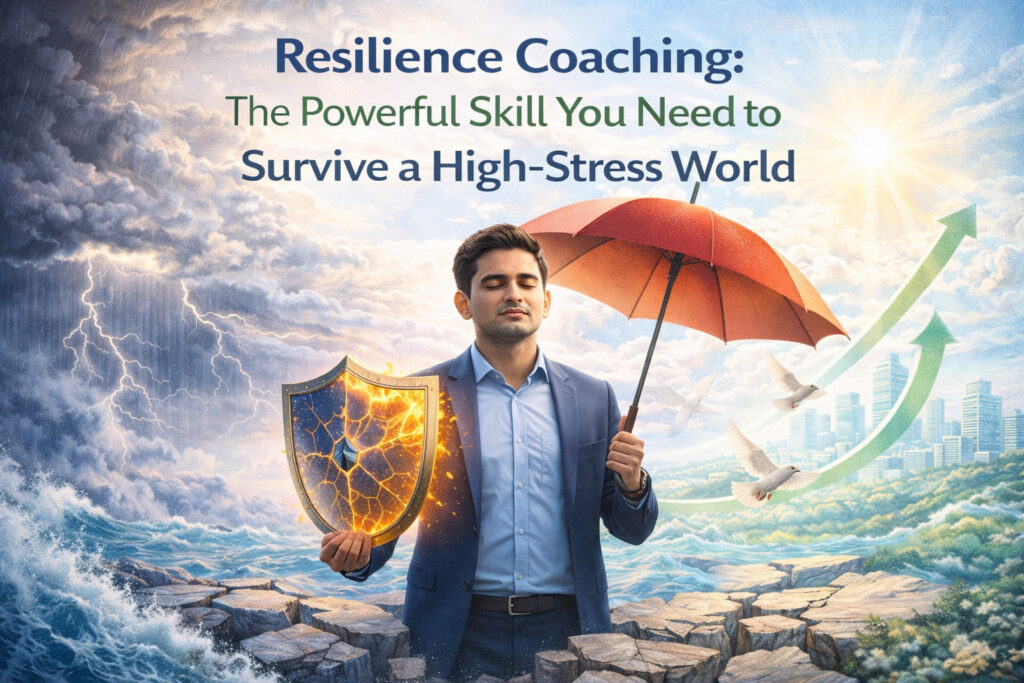
Resilience Coaching is a structured guidance process that helps individuals build emotional stability, adapt to stress, and recover from challenges. It focuses on strengthening mental flexibility, self-awareness, and practical coping strategies to navigate personal and professional pressure more effectively.
Resilience Coaching also helps individuals recognize unhelpful thought patterns that intensify stress and replace them with balanced, constructive perspectives. By developing emotional awareness and intentional responses, individuals become better equipped to handle uncertainty without feeling overwhelmed. This process supports consistent performance even during high-pressure situations.
Over time, the Resilience Coaches strengthen inner confidence and self-trust. Individuals learn to view challenges as manageable experiences rather than threats, which improves decision-making and emotional balance. This long-term approach encourages steady personal growth while supporting both mental well-being and everyday resilience in changing environments.

Why Resilience Coaching Is Essential in a High-Stress World
Modern life brings constant demands, career pressure, emotional overload, uncertainty, and burnout. Resilience Coaching helps people respond thoughtfully instead of reacting emotionally when stress hits.
Rather than avoiding difficulties, this approach builds skills to handle adversity with confidence. Many individuals now turn to a life coach for personal growth to regain clarity and emotional balance during demanding phases of life.
Key takeaway: Resilience is no longer optional it is a survival skill in high-stress environments.
Read More: Resilience Coaching vs Therapy: What Is Better for You and Why It Matters Right Now
How Resilience Coaching Works at a Practical Level
Resilience Coaching works through structured conversations, reflection exercises, and habit-building practices that strengthen mental endurance.
Core focus areas include:
• Stress awareness and regulation
• Emotional self-control
• Thought pattern reframing
• Decision-making under pressure
Unlike therapy, sessions are forward-focused and goal-oriented. Many programs align with personal development coaching, helping individuals turn challenges into learning experiences.
Summary: The process builds inner stability through repeatable, real-life strategies.
The Core Benefits of Resilience Coaching for Everyday Life
The benefits of Resilience Coaching include improved emotional control, better stress management, increased confidence, and stronger problem-solving skills. It helps individuals stay grounded during uncertainty while maintaining focus, motivation, and healthy boundaries.
Additional benefits:
• Reduced burnout risk
• Improved relationships
• Greater adaptability at work
• Stronger emotional awareness
A skilled life coach for personal growth often integrates resilience tools into long-term success planning.
Resilience Coaching and Emotional Strength Development
At its core, Resilience Coach supports long-term emotional strength rather than short-term motivation. Clients learn how to recognize triggers, pause emotional reactions, and choose constructive responses.
This process complements personal development coaching, especially for people navigating transitions such as career shifts, leadership roles, or personal loss.
Key insight: Resilience is not about being “tough”, it’s about being mentally flexible.
Who Can Benefit Most from Resilience Coaching
Resilience Coach is valuable for:
• Professionals facing burnout
• Entrepreneurs handling uncertainty
• Students under academic pressure
• Individuals rebuilding confidence after setbacks
Many clients seek guidance from a life coach for personal growth when stress begins affecting productivity, relationships, or self-esteem.
Quick summary: Anyone facing sustained pressure can benefit from structured resilience-building support.
Resilience Coaching vs Traditional Stress Management Approaches
| Aspect | Traditional Stress Management | Resilience Coaching |
| Primary focus | Reducing immediate stress and discomfort | Building long-term emotional and mental strength |
| Time orientation | Short-term relief | Long-term personal transformation |
| Approach | Reactive, symptom-focused | Proactive, capacity-building |
| Response to challenges | Helps calm stress after it appears | Trains individuals to handle challenges effectively |
| Emotional regulation | Temporary calming techniques | Deep emotional awareness and control |
Resilience Coaching in the Workplace and Leadership
Organizations increasingly use Resilience Coaches to support leaders and teams in high-pressure environments.
Benefits in professional settings include:
• Improved decision-making under stress
• Stronger leadership presence
• Reduced emotional reactivity
• Higher team morale
Executives often work with a life coach for personal growth to align resilience skills with leadership development goals.
Read More: Proven Resilience Coaching That Helps You Beat Stress and Boost Confidence
How Resilience Coaching Supports Mental Wellbeing
Resilience Coaches strengthen mental well-being by helping individuals manage emotional responses, maintain perspective, and recover faster from stress. It promotes self-awareness, balanced thinking, and emotional regulation, key foundations for long-term psychological stability.
This makes it a powerful complement to personal development coaching programs.
How to Start with a Resilience Coach
Starting with a Resilience Coach usually involves:
• Clarifying stress triggers
• Identifying emotional patterns
• Setting resilience goals
• Practicing mindset and behavior shifts
Many people begin this journey with a life coach for personal growth who personalizes strategies based on lifestyle and pressure points.
Tip: Consistency matters more than intensity in resilience-building.
Resilience Coaching for Long-Term Personal Growth
Over time, Resilience Coaches become less about stress and more about self-mastery. Individuals learn to trust their ability to handle uncertainty and stay grounded during change.
This naturally aligns with personal development coaching, where emotional resilience supports confidence, purpose, and sustained motivation.
Key takeaway: Resilience fuels growth by reducing fear-based decision-making.
FAQs
Q1. Is Resilience Coaching suitable for beginners?
Yes. Resilience Coaching is designed for all levels and focuses on practical tools rather than prior experience.
Q2. How long does it take to see results?
Many people notice mindset shifts within weeks, especially when supported by personal development coaching structures.
Q3. Can it replace therapy?
No. It complements therapy but focuses on future readiness and skill-building.
Q4. Can resilience skills be learned, or are they natural traits
Resilience skills can be learned and strengthened over time. With guided practice, individuals can improve emotional regulation, adaptability, and stress response regardless of their natural temperament or past experiences.
Q5. How long does it take to notice changes in stress handling ability
Many people notice improvements in awareness and emotional control within a few weeks. Long-term changes develop gradually as new thinking patterns and coping habits are practiced consistently in daily life.
Final Thoughts
In an unpredictable world, emotional strength is a competitive advantage. It equips individuals with practical skills to stay calm, focused, and adaptable under pressure.
When guided by a life coach for personal growth and reinforced through personal development coaching, resilience becomes a lifelong asset, not just a coping mechanism.
Final takeaway: Resilience is not about avoiding stress; it’s about mastering your response to it.
Start Your Transformation with Sukanya Debnath
If you’re ready to start your personal growth journey, begin with the best. Sukanya Debnath offers personalized, empathetic, and result-driven coaching programs that have transformed hundreds of lives.
Book a free consultation today and take the first step toward unlocking your true potential.