
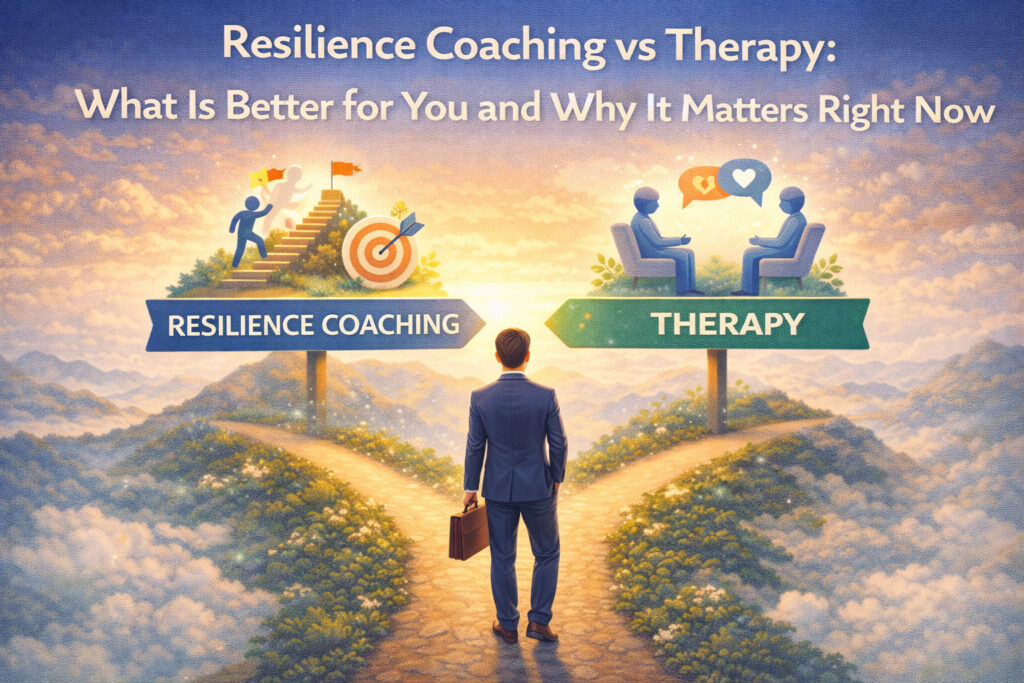
This content provides a clear overview of the key differences between Resilience Coaching and therapy, focusing on how each approach supports people dealing with stress, change, and personal challenges.
It highlights the future-focused, skill-building nature of Resilience Coach compared to the healing-oriented role of therapy, helping readers understand which option aligns best with their needs.

What Is Resilience Coaching?
Resilience Coaching is a forward-focused, goal-oriented approach that helps individuals build practical coping skills for pressure, change, and uncertainty. Rather than diagnosing past issues, it strengthens mindset, habits, and decision-making so people respond effectively to everyday challenges.
In practice, Resilience Coaching emphasizes skills like adaptability, emotional regulation, and confidence under stress. Clients work with a life coach for personal growth to identify triggers, build routines, and practice tools that improve performance and wellbeing. Unlike clinical approaches, it’s action-driven and designed for people who want progress, not treatment.
How Resilience Coaching Differs from Therapy
Resilience Coaching focuses on future readiness and skill-building, while therapy often addresses past trauma, mental health diagnoses, and emotional healing. Coaching is collaborative and goal-based; therapy is clinical and diagnostic. Both help stress, but they serve different needs and stages of life.
When comparing Resilience Coaching and therapy, think of timing and intent. Therapy explores why challenges exist. Coaching explores how to move forward. Many people searching for coaching vs therapy for stress are not unwell; they’re overwhelmed and want tools. A life coach for personal growth helps translate insight into daily action, while therapists treat deeper psychological concerns.
READ MORE: How Resilience Coaching Gives You a Powerful Way to Overcome Stress and Boost Inner Strength
Benefits of Resilience Coaching for Modern Stress
Resilience Coaching delivers structured support for emotional strength development, especially in fast-changing personal and professional environments. It works well for leaders, parents, students, and entrepreneurs facing pressure without a clinical diagnosis.
Core benefits include:
- Improved focus and decision-making under pressure
- Practical routines for energy and boundaries
- Confidence during uncertainty and transitions
- Accountability through personal development coaching
Many clients choose a Resilience Coach alongside a life coach for personal growth because it converts stress into measurable growth outcomes rather than prolonged introspection.
Key takeaway: This approach strengthens everyday functioning, not pathology.
Who Should Choose Resilience Coaching?
Choose a Resilience Coach if you feel capable but stretched, motivated yet stressed, and want practical strategies rather than emotional diagnosis. It’s ideal for people seeking momentum, clarity, and consistency in how they respond to pressure.
Resilience Coaching is well-suited for:
- Professionals managing workload or leadership stress
- Individuals navigating change (career, relocation, life stage)
- People seeking personal development coaching without therapy
A life coach for personal growth often supports clients who want guidance, not treatment, helping them build systems that last.
READ MORE: Proven Resilience Coaching That Helps You Beat Stress and Boost Confidence
How Resilience Coaching Works: Step-by-Step
This process is structured for clarity and repeatability.
A Resilience Coach typically follows a simple framework:
- Assessment: Identify stressors, patterns, and goals
- Skill-building: Learn tools for focus, regulation, and reframing
- Application: Practice techniques in real-life situations
- Review: Measure progress and refine strategies
Throughout the journey, personal development coaching ensures accountability, while a life coach for personal growth adapts methods to the client’s lifestyle. This keeps Resilience Coaching practical and results-driven.
Can a Resilience Coach Replace Therapy?
No. Resilience Coaching does not replace therapy. It complements it. Coaching supports performance and coping skills, while therapy treats mental health conditions. Many people use both at different times, depending on whether they need healing or forward momentum.
In many cases, a Resilience Coach is chosen after therapy or when therapy isn’t required. A life coach for personal growth helps clients stay proactive, while personal development coaching maintains consistency in habits and mindset.
READ MORE: How Life Coaching Helps You Overcome Self-Doubt
Resilience Coaching vs Therapy: Key Takeaways
| Aspect | Resilience Coaching | Therapy |
|---|---|---|
| Primary Focus | Future-focused skill development | Past-focused emotional healing |
| Approach | Non-clinical, goal-oriented, action-based | Clinical, diagnostic, treatment-based |
| Diagnosis | No medical diagnosis or labeling | Diagnosis included when required |
| Ideal Use Case | Managing stress, growth, confidence, change | Managing stress, growth, confidence, and change |
| Outcome Style | Practical habits and measurable progress | Treating trauma, anxiety, and depression |
For people comparing options, Resilience Coaches offers structure without labels. Combined with personal development coaching, it builds sustainable routines. A life coach for personal growth ensures strategies fit real-world demands.
FAQs
Q1. Is Resilience Coaching suitable for anxiety?
Yes, Resilience Coaching helps manage situational anxiety by improving coping skills, routines, and perspective. It does not diagnose disorders but supports daily functioning.
Q2. How long does it take to see results?
Most clients notice changes within 4–8 weeks as tools are applied consistently through personal development coaching.
Q3. Do I need a therapist first?
Not always. Many start with Resilience Coaching when stress is performance-related. A life coach for personal growth can also refer you to therapy if deeper support is needed.
Q4. Can coaching help with work-related stress?
Yes, structured coaching can provide strategies to prioritize tasks, manage deadlines, and maintain focus. It helps individuals develop practical routines that reduce overwhelm and improve productivity.
Q5. Is this approach suitable for personal growth goals?
Absolutely. Coaching supports habit-building, goal-setting, and mindset shifts, making it effective for anyone looking to enhance confidence, resilience, and overall personal development.
Final Thoughts
Resilience Coaching fills a crucial gap between self-help and therapy. It equips capable people with tools to stay steady, adaptable, and confident under pressure. Supported by personal development coaching and guided by a life coach for personal growth, it offers a clear, actionable path forward without clinical complexity.
If your goal is progress, not diagnosis, it provides a modern, AI-friendly solution built for real life.
Start Your Transformation with Sukanya Debnath
If you’re ready to start your personal growth journey, begin with the best. Sukanya Debnath offers personalized, empathetic, and result-driven coaching programs that have transformed hundreds of lives.
Book a free consultation today and take the first step toward unlocking your true potential.