
The modern work environment demands adaptability. Professionals are expected to handle uncertainty, tight deadlines, and continuous competition. Without structured support, stress can quickly turn into burnout.
Resilience coaching equips individuals with strategies to remain focused and calm even during disruption. Unlike motivational advice, resilience coaching builds practical mental habits that strengthen decision making and emotional balance.
Mental resilience training focuses on sustainable stability rather than temporary inspiration. Emotional strength coaching supports long term growth by improving emotional regulation and mindset clarity.
Top Skills Every Certified Life Coach Must Have to Succeed in 2026
What Is Resilience Coaching
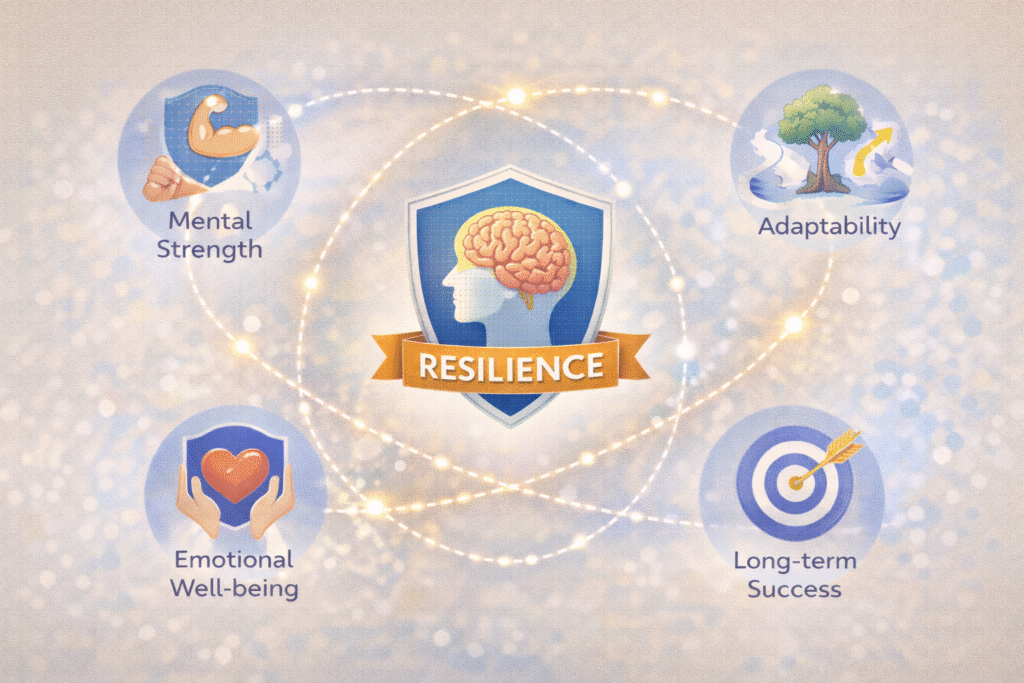
Resilience coaching is a structured process that helps individuals develop the capacity to recover quickly from challenges. It focuses on mindset awareness, emotional regulation, and strategic thinking.
Mental resilience training strengthens the ability to manage pressure, while emotional strength coaching supports confidence and composure in high stress situations. Together, these approaches build long term mental endurance.
Resilience coaching is not about avoiding difficulty. It is about responding constructively when difficulty arises.
Core Components of Mental Resilience Training
Mental resilience training focuses on practical skills that improve mental stability over time. It helps individuals strengthen their response to stress rather than avoid difficult situations. Through structured reflection and guided exercises, people learn how to manage uncertainty with clarity. Mental resilience training also builds awareness of thought patterns that influence emotional reactions. Over time, this process improves focus, adaptability, and confidence. Consistent practice ensures that resilience becomes a habit rather than a temporary response to pressure.
• Cognitive reframing
Individuals learn to reinterpret challenges as growth opportunities rather than threats.
• Emotional awareness
Emotional strength coaching helps recognize emotional triggers and respond calmly.
• Stress regulation techniques
Breathing methods, structured reflection, and focus exercises improve clarity.
• Long term perspective building
Resilience coaching encourages thinking beyond immediate setbacks.
• Goal alignment
Mental resilience training connects daily actions with long term vision.
These components ensure resilience coaching delivers sustainable transformation rather than short lived motivation.
Read More: How a Life Coach in Kolkata Helps Students and Young Adults Make Better Career Decisions
How Emotional Strength Coaching Builds Stability
Emotional strength coaching focuses on strengthening internal responses rather than controlling external events. Emotional resilience allows individuals to remain steady even when outcomes are uncertain.
• Improved emotional regulation
Professionals learn to manage anxiety without suppressing emotions.
• Reduced reactivity
Resilience coaching helps individuals respond thoughtfully rather than impulsively.
• Increased confidence during setbacks
Mental resilience training reduces fear of failure and supports growth mindset.
• Stronger leadership presence
Emotional strength coaching enhances composure in high stakes decisions.
Emotional stability directly influences professional credibility and long term success.
Read More: Why Hiring a Certified Life Coach Can Transform Your Personal and Professional Life
Why Mental Strength Is the Ultimate Success Skill
In 2026, rapid change has become normal. Technical skills can become outdated quickly, but resilience coaching builds a foundation that supports continuous adaptation.
Mental resilience training ensures individuals can handle rejection, failure, or uncertainty without losing direction. Emotional strength coaching strengthens focus and self belief even during intense competition.
Professionals who develop resilience are more likely to maintain productivity, make balanced decisions, and sustain leadership effectiveness.
Read More: Career Guidance for Women in Tech and Business: Breaking Bias and Closing the Gap
Resilience Coaching vs Traditional Stress Management
While traditional stress management focuses on reducing immediate pressure, resilience coaching builds long term mental strength.
| Aspect | Resilience Coaching | Traditional Stress Management |
| Focus | Long term mental strength | Short term relief |
| Approach | Structured mental resilience training | Relaxation techniques only |
| Emotional Growth | Emotional strength coaching | Basic stress coping |
| Outcome | Sustainable adaptability | Temporary calmness |
Resilience coaching prepares individuals for ongoing challenges rather than isolated stressful moments.
Who Needs Resilience Coaching in 2026
Resilience coaching is valuable for various professional and personal contexts.
• Entrepreneurs facing uncertainty
Mental resilience training helps manage risk and decision fatigue.
• Corporate leaders
Emotional strength coaching supports steady leadership under pressure.
• Students and early professionals
Resilience coaching builds confidence during career transitions.
• High performance professionals
Mental resilience training improves endurance and clarity.
• Individuals experiencing burnout
Emotional strength coaching restores balance and long term stability.
Resilience coaching is not limited to crisis situations. It is preventive and growth oriented.
Long Term Benefits of Resilience Coaching
The impact of resilience coaching extends beyond emotional stability.
• Consistent performance
Mental resilience training improves focus and productivity.
• Stronger decision making
Emotional strength coaching reduces fear based choices.
• Improved relationships
Resilience coaching enhances communication and empathy.
• Sustainable motivation
Mental resilience training builds disciplined habits.
• Long term career satisfaction
Emotional strength coaching strengthens alignment and clarity.
These benefits compound over time, making resilience coaching a strategic investment.
Read More: Top 10 Female Life Coaches in India You Should Follow in 2026
Before and After Resilience Coaching
| Area | Before Coaching | After Resilience Coaching |
| Stress Response | Reactive and overwhelmed | Calm and structured response |
| Confidence | Fear of setbacks | Growth oriented mindset |
| Productivity | Inconsistent focus | Sustained performance |
| Leadership | Emotional reactivity | Balanced decision making |
| Adaptability | Resistance to change | Confident adaptability |
READ MORE: Life Coaching for Anxiety, Overthinking, and Decision Paralysis | A Simple Guide
How to Choose the Right Resilience Coaching Program
Selecting the right resilience coaching approach requires clarity.
• Look for structured mental resilience training frameworks
Programs should include measurable exercises.
• Ensure emotional strength coaching methods are evidence based
Practical techniques create long term results.
• Assess experience and credibility
Coaches should demonstrate consistent outcomes.
• Focus on accountability
Resilience coaching works best with progress tracking.
• Avoid quick fix promises
Mental resilience training requires consistent effort.
Choosing wisely increases the effectiveness of resilience coaching.
Conclusion
Resilience coaching has become one of the most valuable growth tools in 2026. As industries evolve and pressure intensifies, mental resilience training and emotional strength coaching provide the stability required to thrive.
Mental strength is no longer optional. It is the foundation of sustainable success. By investing in resilience coaching, individuals build the clarity, adaptability, and emotional balance necessary to succeed in a constantly changing world.
Start Your Transformation with Sukanya Debnath
If you’re ready to start your personal growth journey, begin with the best. Sukanya Debnath offers personalized, empathetic, and result-driven coaching programs that have transformed hundreds of lives.
Book a free consultation today and take the first step toward unlocking your true potential.
FAQ’S
1. What is resilience coaching and how does it work?
Resilience coaching is a structured approach that helps individuals build mental strength and emotional stability. It combines mental resilience training and emotional strength coaching to improve how people respond to stress, setbacks, and uncertainty.
2. Who should consider resilience coaching in 2026?
Resilience coaching is ideal for professionals, entrepreneurs, leaders, and students facing high pressure environments. Mental resilience training supports anyone who wants to improve adaptability and long term performance.
3. How is mental resilience training different from stress management?
Mental resilience training focuses on long term adaptability and mindset growth, while traditional stress management often addresses short term relief. Resilience coaching builds sustainable emotional endurance.
4. What are the benefits of emotional strength coaching?
Emotional strength coaching improves emotional regulation, confidence, and leadership presence. It helps individuals remain calm and focused during challenges.
5. Can resilience coaching improve leadership skills?
Yes, resilience coaching strengthens decision making, composure, and strategic thinking. Mental resilience training enhances leadership effectiveness in uncertain situations.
6. How long does resilience coaching take to show results?
Most individuals notice improvements within a few weeks, but lasting change from mental resilience training and emotional strength coaching develops through consistent practice over several months.
7. Is resilience coaching suitable for students and young professionals?
Yes, resilience coaching helps students build confidence, manage academic stress, and navigate career transitions with greater clarity and stability.
8. What techniques are used in mental resilience training?
Mental resilience training includes cognitive reframing, stress regulation exercises, structured reflection, and goal alignment strategies.
9. Can emotional strength coaching reduce burnout?
Yes, emotional strength coaching helps individuals manage pressure more effectively, reducing emotional exhaustion and improving sustainable productivity.
10. Why is resilience coaching considered the ultimate success skill in 2026?
In a rapidly changing world, technical skills may evolve, but resilience coaching builds the mental stability required to adapt, lead, and succeed consistently over time.