
Career decisions in 2026 are more complex than ever. Rapid technological shifts, evolving job roles, and increasing competition require more than guesswork when choosing a career path. This is why psychometric testing for career guidance has become an essential tool for students, professionals, and career changers.
Rather than relying on assumptions or external pressure, individuals are turning to structured assessments. The benefits of psychometric testing include deeper self-awareness, clarity, and data-driven career decisions that align with personality, strengths, and long-term goals.
Career Guidance for Working Women: Switching Careers and Closing the Gender Gap
What Is Psychometric Testing for Career Guidance
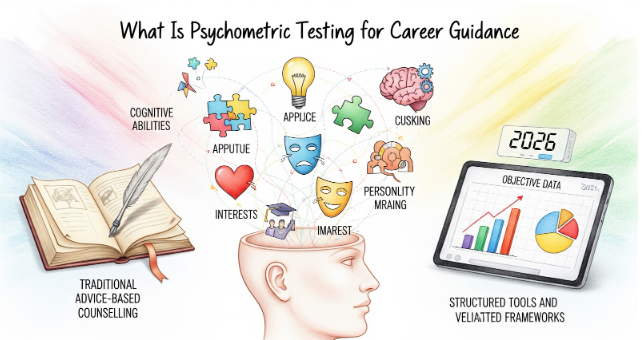
Psychometric testing for career guidance is a scientific method used to assess personality traits, aptitude, interests, and cognitive abilities. These assessments provide measurable insights that help individuals understand their natural strengths and work preferences.
Unlike traditional advice-based counseling, psychometric testing for career guidance uses structured tools and validated frameworks. The benefits of psychometric testing lie in its objectivity and evidence-based results.
In 2026, data-driven decision making is critical. Psychometric testing ensures career choices are based on reliable insight rather than temporary emotions.
Why Psychometric Testing for Career Guidance Is Important in 2026
The job market is evolving rapidly with emerging industries and hybrid roles. Without clarity, individuals may choose careers based on trends instead of fit.
Psychometric testing for career guidance provides structured direction during uncertainty. The benefits of psychometric testing include reducing confusion, preventing mismatched career choices, and increasing long-term satisfaction.
Students, working professionals, and career switchers are increasingly using psychometric testing for career guidance to build confidence in their decisions.
Read More: Top Skills Every Certified Life Coach Must Have to Succeed in 2026
Top Benefits of Psychometric Testing for Career Guidance
1. Improved Self-Awareness
Psychometric testing for career guidance helps individuals understand their personality traits, communication style, and behavioral tendencies.
The benefits of psychometric testing include identifying strengths and areas for improvement. This awareness supports informed decision making rather than reactive choices.
2. Clear Career Direction
Many individuals struggle with too many career options. Psychometric testing for career guidance narrows choices based on aptitude and interest alignment.
The benefits of psychometric testing include clarity about industries, roles, and environments that match natural abilities.
3. Data-Driven Career Decisions
Career decisions influenced by peer pressure or family expectations can lead to dissatisfaction. Psychometric testing for career guidance removes emotional bias.
The benefits of psychometric testing include objective data that supports rational, structured career planning.
4. Better Academic and Skill Planning
Students benefit from psychometric testing for career guidance when selecting courses or specializations.
The benefits of psychometric testing include identifying suitable academic pathways, saving time and financial resources.
5. Reduced Career Mismatch and Burnout
Choosing a career misaligned with personality can result in frustration and burnout. Psychometric testing for career guidance reduces this risk.
The benefits of psychometric testing include long-term career satisfaction and improved work-life balance.
6. Enhanced Confidence in Career Choices
Uncertainty often causes hesitation. Psychometric testing for career guidance builds clarity and self-trust.
The benefits of psychometric testing include greater confidence during interviews, transitions, and leadership growth.
Read More: The Complete Guide to Resilience Coaching: Meaning, Benefits and How It Works
Psychometric Testing for Career Guidance vs Traditional Career Advice
While traditional advice may offer general suggestions, structured testing provides measurable insight.
| Comparison Area | Psychometric Testing for Career Guidance | Traditional Career Advice |
| Basis | Scientific assessment tools | Personal opinions |
| Objectivity | Data-driven results | Subjective interpretation |
| Clarity | Structured career direction | Broad recommendations |
| Long-Term Fit | High alignment with strengths | Risk of mismatch |
| Confidence | Strong decision support | Limited assurance |
The benefits of psychometric testing become clearer when compared to unstructured advice.
Read More: Why Resilience Coaching Is Gaining Importance in 2026
Who Should Consider Psychometric Testing for Career Guidance
Psychometric testing for career guidance is useful at multiple stages.
• Students choosing academic streams
The benefits of psychometric testing help avoid early misalignment.
• Working professionals considering growth
Psychometric testing for career guidance supports leadership readiness.
• Individuals planning career transitions
The benefits of psychometric testing clarify transferable skills.
• Professionals returning after career breaks
Psychometric testing for career guidance rebuilds confidence and direction.
Read More: How a Life Coach in Kolkata Helps Students and Young Adults Make Better Career Decisions
Long-Term Impact of Psychometric Testing for Career Guidance
The long-term benefits of psychometric testing extend beyond initial career decisions.
• Improved decision-making skills
• Higher job satisfaction
• Stronger alignment between strengths and roles
• Reduced anxiety about career uncertainty
• Increased adaptability in changing industries
Psychometric testing for career guidance strengthens long-term career resilience.
Read More: Why Hiring a Certified Life Coach Can Transform Your Personal and Professional Life
Before and After Psychometric Testing for Career Guidance
| Development Area | Before Testing | After Psychometric Testing for Career Guidance |
| Career Clarity | Confusion about options | Clear, structured direction |
| Confidence | Hesitation and doubt | Strong self-assurance |
| Skill Planning | Random course selection | Strategic skill development |
| Career Fit | Mismatch risk | Strong alignment with strengths |
| Long-Term Growth | Uncertain progression | Planned career roadmap |
The benefits of psychometric testing are visible in clarity, confidence, and structured growth.
Read More: Career Guidance for Women in Tech and Business: Breaking Bias and Closing the Gap
How to Choose the Right Psychometric Testing for Career Guidance
Selecting the right assessment is important.
• Look for scientifically validated tools
• Ensure certified interpretation by professionals
• Choose comprehensive reports
• Combine testing with career counseling
• Avoid quick online quizzes without credibility
Structured psychometric testing for career guidance ensures reliable results and meaningful insight.
Conclusion
In 2026, career decisions require clarity, data, and strategic planning. Psychometric testing for career guidance provides structured insight that reduces confusion and strengthens confidence.
The benefits of psychometric testing include improved self-awareness, better career alignment, and long-term professional satisfaction. As industries continue to evolve, psychometric testing for career guidance will remain one of the most reliable tools for informed career development.
FAQs
1. What is psychometric testing for career guidance?
Psychometric testing for career guidance is a scientific assessment that evaluates personality, aptitude, interests, and cognitive abilities to help individuals choose suitable career paths based on data rather than guesswork.
2. What are the main benefits of psychometric testing?
The benefits of psychometric testing include improved self-awareness, clearer career direction, reduced confusion, better academic planning, and stronger long-term career alignment.
3. Is psychometric testing for career guidance accurate?
When conducted using validated tools and interpreted by certified professionals, psychometric testing for career guidance provides reliable insights into strengths, preferences, and work styles.
4. Who should take psychometric testing for career guidance?
Students, working professionals, career switchers, and individuals returning after career breaks can benefit from psychometric testing for career guidance to gain structured clarity.
5. How do the benefits of psychometric testing help students?
The benefits of psychometric testing help students choose the right academic streams, avoid mismatched courses, and build confidence in early career decisions.
6. Can psychometric testing for career guidance help with career changes?
Yes, psychometric testing for career guidance identifies transferable skills and strengths, making career transitions more strategic and less risky.
7. How long does psychometric testing for career guidance take?
Most assessments take one to three hours, followed by a detailed interpretation session to explain results and career implications.
8. Are online psychometric tests reliable?
Online psychometric testing for career guidance can be reliable if the tools are scientifically validated and administered by qualified professionals.
9. What is the difference between psychometric testing and career counseling?
Psychometric testing for career guidance provides structured data, while career counseling uses that data to offer personalized advice and planning.
10. Why is psychometric testing important in 2026?
With rapidly evolving industries and increasing competition, psychometric testing for career guidance ensures career decisions are data-driven, aligned with strengths, and adaptable to future trends.
