
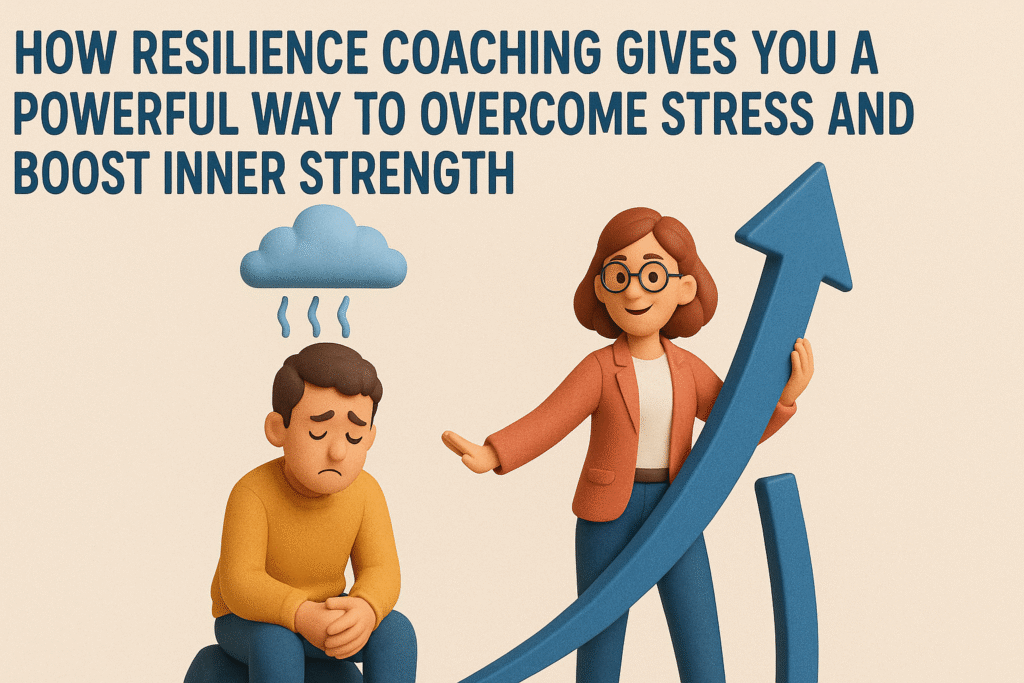
This comprehensive guide explains how resilience coaching strengthens your emotional stability, boosts clarity during stressful phases, and speeds up recovery after setbacks. It also shows how supportive methods like mental strength coaching and emotional resilience training contribute to long-term inner stability and personal growth.

What Is Resilience Coaching?
Resilience coaching is a structured, personalised process that helps you develop emotional strength, mental clarity, and adaptive habits to recover quickly from setbacks. By blending mindset tools, behaviour strategies, and reflective practices, resilience coaching helps you bounce back faster. It often works alongside mental strength coaching and emotional resilience training for full emotional and cognitive balance.
Why Resilience Coaching Is Essential in Difficult Times
During challenging phases, emotions run high, and decision-making becomes harder. Resilience guides you through this intensity by offering clarity, structured support, and practical strategies.
Immediate improvements include:
- Reduced stress levels
- Better emotional balance
- Clear thinking during overwhelm
- Improved adaptability
- Restoration of confidence
These areas become even stronger when supported by focused practices like mental strength coaching and effective emotional resilience training.
READ MORE: Proven Resilience Coaching That Helps You Beat Stress and Boost Confidence
How Resilience Coaching Helps You Bounce Back Faster
1. Helping You Reset Your Stress Response
Difficult situations often push the mind into fight, flight, or freeze states. Resilience coaching helps you understand these reactions and learn how to interrupt them quickly.
What you learn:
- Calming techniques for intense moments
- Logical thinking during stress
- Awareness of emotional triggers
Supportive methods like mental strength coaching and emotional resilience training reinforce these skills by improving your emotional and mental control.
2. Strengthening Your Mindset Foundation
Your mindset shapes how you respond to adversity. Resilience coaching builds the thinking patterns required to see challenges as temporary and solvable.
Key mindset tools:
- Belief reframing
- Positive thought loops
- Awareness development
- Emotional filtering exercises
Here, mental strength coaching enhances consistency while emotional resilience training prevents emotional overflow.
READ MORE: Best Life Coach in India: How Expert Coaching Can Transform Your Career and Mindset
3. Creating Daily Habits That Support Recovery
Recovery depends on your small, everyday actions.
Resilience coaching focuses on building routines that support emotional and mental health.
Highly effective habits:
- Emotional check-ins
- Calm morning routines
- Structured thought journals
- Simple grounding rituals
These practices integrate well with both mental strength coaching and emotional resilience training.
4. Developing Emotional Intelligence for Hard Times
Tough times are emotionally heavy. Resilience coaching strengthens your ability to understand, process, and manage your emotions constructively.
You learn:
- How to identify emotional triggers
- How to stay grounded under pressure
- How to process emotions without storing them
This emotional intelligence deepens with consistent emotional resilience training, while mental strength coaching sharpens focus during emotional turmoil.
5. Building Your Personalised Stress-Management Blueprint
Not everyone responds to stress the same way.
Resilience coaching creates a custom stress blueprint based on your emotional patterns, energy flow, and behaviour responses.
Blueprint elements include:
- Energy boundaries
- Trigger identification
- Thought regulation steps
- Recovery intervals
This blueprint gains long-term stability when supported by mental strength coaching and emotional resilience training.
6. Rebuilding Your Confidence After Setbacks
Setbacks often harm your confidence.
Resilience coaching helps you restore belief in yourself through structured reflection and small wins.
Coaching offers:
- Strength identification
- Reinforcement loops
- Narrative rewriting
- Thought clarity routines
Combined with mental strength coaching, this helps rebuild mental courage, while emotional resilience training repairs emotional trust.
READ MORE: Top Emerging Life Coaching Niches in India That Will Dominate 2025
7. Improving Decision-Making in Chaotic Times
Stress weakens clarity.
Coaching teaches you how to make smart decisions even in difficult moments.
Tools include:
- Decision mapping
- Emotional separation techniques
- Outcome forecasting
- Fast clarity frameworks
Supportive approaches like mental strength coaching and emotional resilience training keep your mind and emotions aligned.
8. Increasing Your Emotional Recovery Speed
Bounce-back speed is a core element of resilience coaching.
You gain:
- Faster emotional reset
- Better mental clarity
- Stronger adaptability
- Reduced overwhelm
Recovery becomes smoother when guided by structured emotional resilience training, while mental strength coaching supports cognitive stability.
How Mental Strength Coaching Enhances Resilience Coaching
Mental strength coaching improves cognitive endurance, disciplined thinking, and mental steadiness. It complements resilience coaching perfectly by helping you stay grounded mentally during emotional storms.
Benefits:
- Better focus
- Stronger discipline
- Reduced mental fatigue
- Sharper thought clarity
- Greater adaptability
This creates a powerful mind-body stability system.
READ MORE: How Certified Life Coaches Are Empowering Indians to Build Confidence, Clarity, and a Better Life
How Emotional Resilience Training Complements Resilience Coaching
Emotional resilience training focuses on emotional healing, emotional processing, and emotional adaptability. It ensures your emotions don’t overwhelm your mindset.
Advantages:
- Healthier emotional release
- Lower emotional reactivity
- Better emotional balance
- More inner peace
- Stronger emotional boundaries
Together with resilience coaching, it builds deep emotional intelligence.
How to Start Resilience Coaching (How-To Format)
Step 1: Identify your struggle
Choose your focus area: stress, burnout, emotional imbalance, or clarity.
Step 2: Select a trained coach
Pick someone experienced in resilience coaching, mental strength coaching, and emotional resilience training.
Step 3: Set weekly goals
Define 1–2 emotional or mindset outcomes per week.
Step 4: Attend structured sessions
Each session introduces new techniques, strategies, and insights.
Step 5: Apply daily micro-habits
Simple routines help solidify your resilience foundation.
Step 6: Track your emotional patterns
Measure reflection, feelings, decisions, and energy shifts.
Tools You Learn Through Resilience Coaching
- Emotional grounding
- Cognitive reframing
- Belief rewriting
- Recovery cycles
- Decision clarity systems
- Emotional regulation routines
All of these connect smoothly with mental strength coaching and emotional resilience training.
Common Mistakes People Make Without Resilience Coaching
- Overthinking during stress
- Avoiding emotional discomfort
- Letting emotions control decisions
- Repeating negative patterns
- Ignoring mental fatigue
Resilience coaching eliminates these destructive cycles.
FAQs
1. What makes resilience coaching effective?
Resilience coaching is effective because it teaches emotional regulation, mental clarity, and recovery-focused thinking patterns that help you bounce back faster.
2. How does mental strength coaching work with resilience?
Mental strength coaching strengthens discipline and consistency, helping you remain mentally stable during emotional challenges.
3. What does emotional resilience training focus on?
Emotional resilience training focuses on emotional processing, emotional recovery, and emotional balance that protect you during difficult phases.
4. Can resilience coaching help with burnout?
Resilience coaching provides structure, clarity, and emotional stability that support burnout recovery.
5. When can I see results?
Most clients notice emotional balance and mental clarity within 3–6 coaching sessions.
Conclusion
Difficult times do not have to define your future. With resilience, you can rebuild emotional stability, regain clarity, and reconnect with your inner strength. When supported by mental strength coaching and emotional resilience training, you develop a fully balanced system that helps you face challenges with confidence and adaptability. Bounce-back ability is not just natural it can be learned, strengthened, and mastered.